Hora
Appointment scheduling that runs itself, through the app Latin America already uses every day: WhatsApp.
- Role
- Scrum Master & Product Designer
- Timeline
- 2024 (Q3) to 2025 (Q2)
- Platform
- Web Application, Responsive PWA, WhatsApp chatbot, landing page
- Recognition
- Top 30 in Reto Zapopan’s acceleration category (~700 projects)
Tools
At a glance
Problem
Insight
My contribution
The problem
Hours lost to manual scheduling
Doctors, psychologists, stylists, trainers and other independent professionals spend over 5 hours a week on confirmations, reminders and rescheduling. Cancellations add to the cost: in service sectors, studies suggest they can take 10 to 20% of monthly revenue when the calendar isn’t managed intelligently.
5+ h
Per week spent on confirmations, reminders and rescheduling
10 to 20%
Of monthly revenue that cancellations can take in service sectors
Two more factors made it harder:
01
Low tech adoption.
02
Clients expect more.
The insight
Meet people where they already are
Our research focused on Mexico and LATAM, starting with independent professionals (doctors, psychologists, nutritionists, stylists, personal trainers, consultants, photographers and artists) and later reaching small clinics, salons, spas, repair shops and language schools. Three findings shaped Hora:
100%
Everyone is on mobile.
High
People will pay to save time.
92 to 99%
WhatsApp is the channel.
That gap became our differentiator: instead of teaching users a new tool, we put Hora in the app they already open all day.
The solution
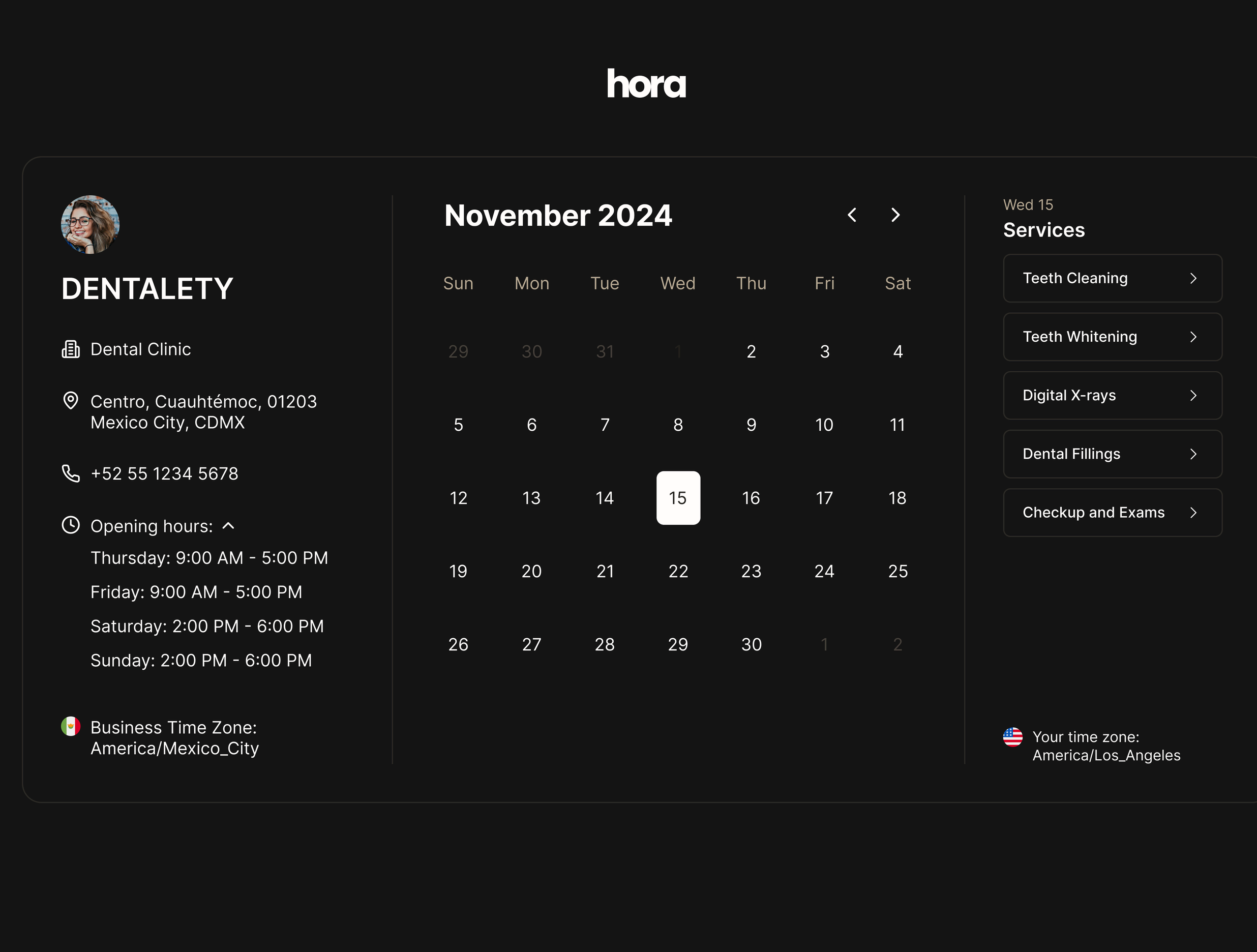
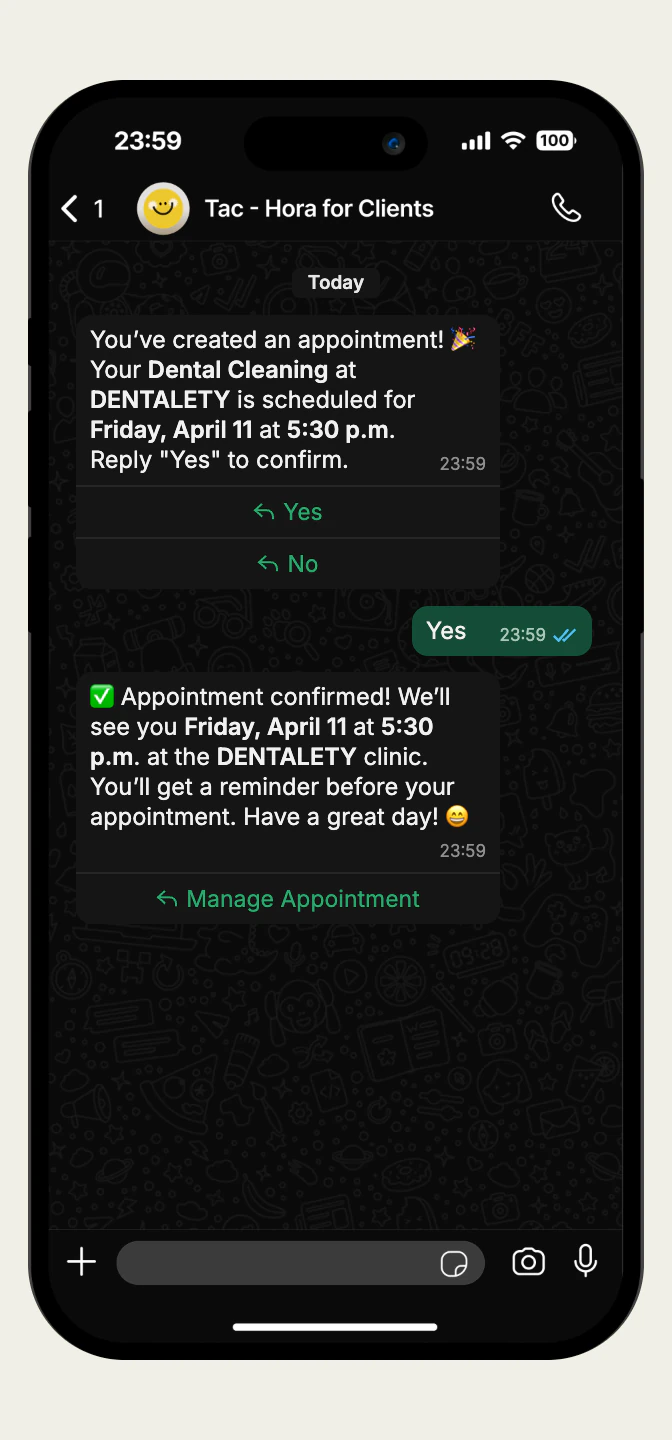
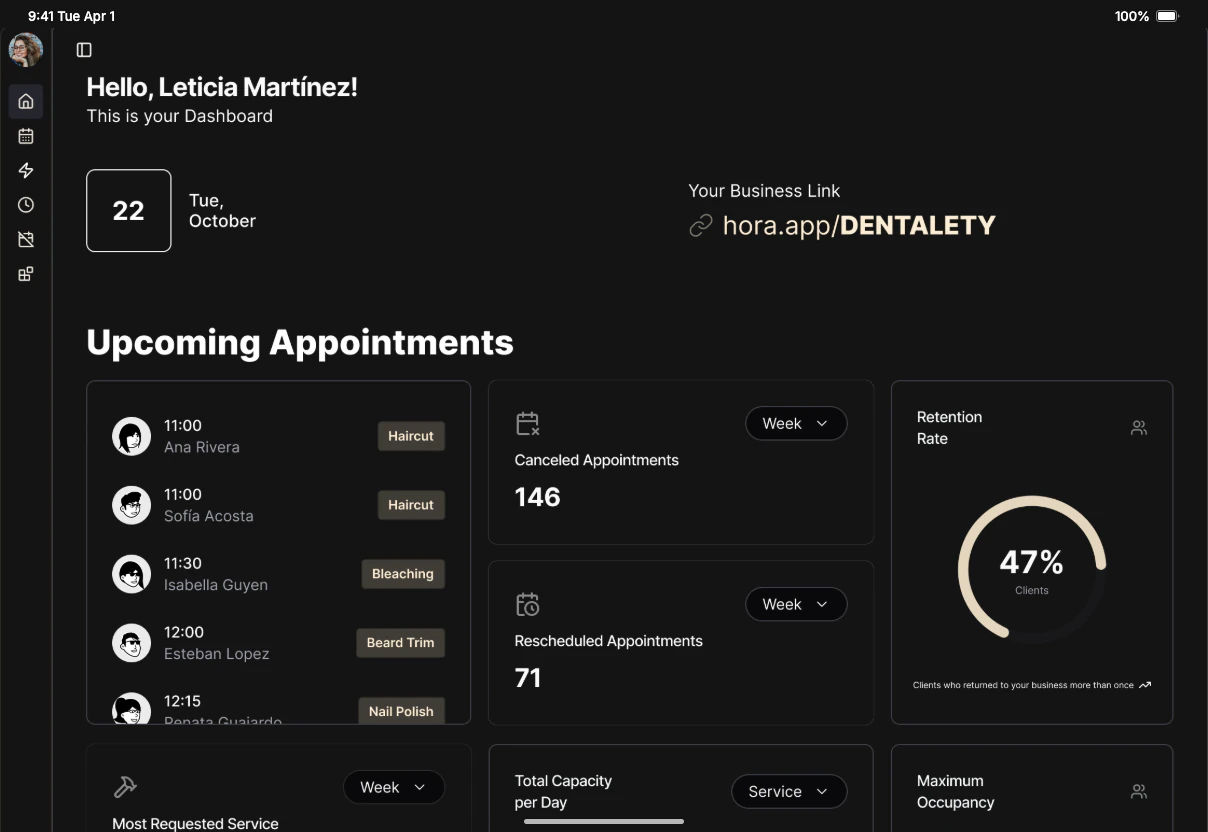
A calendar that manages itself
01
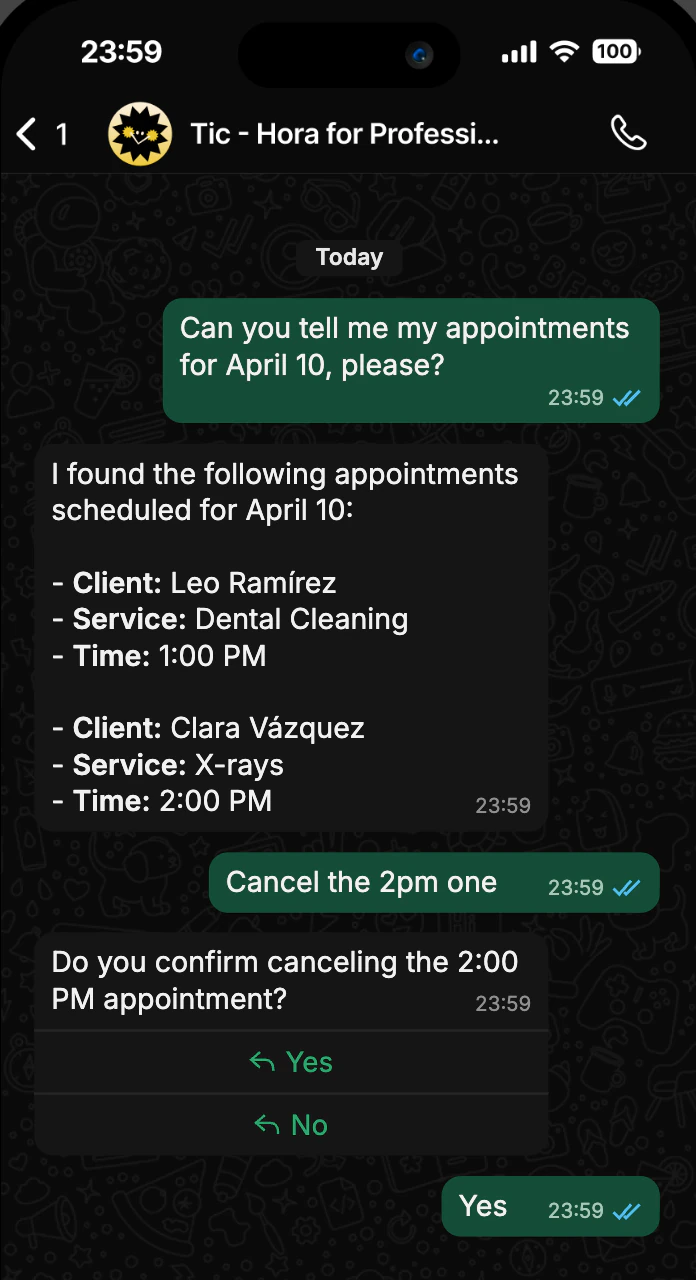
An AI assistant on WhatsApp
02
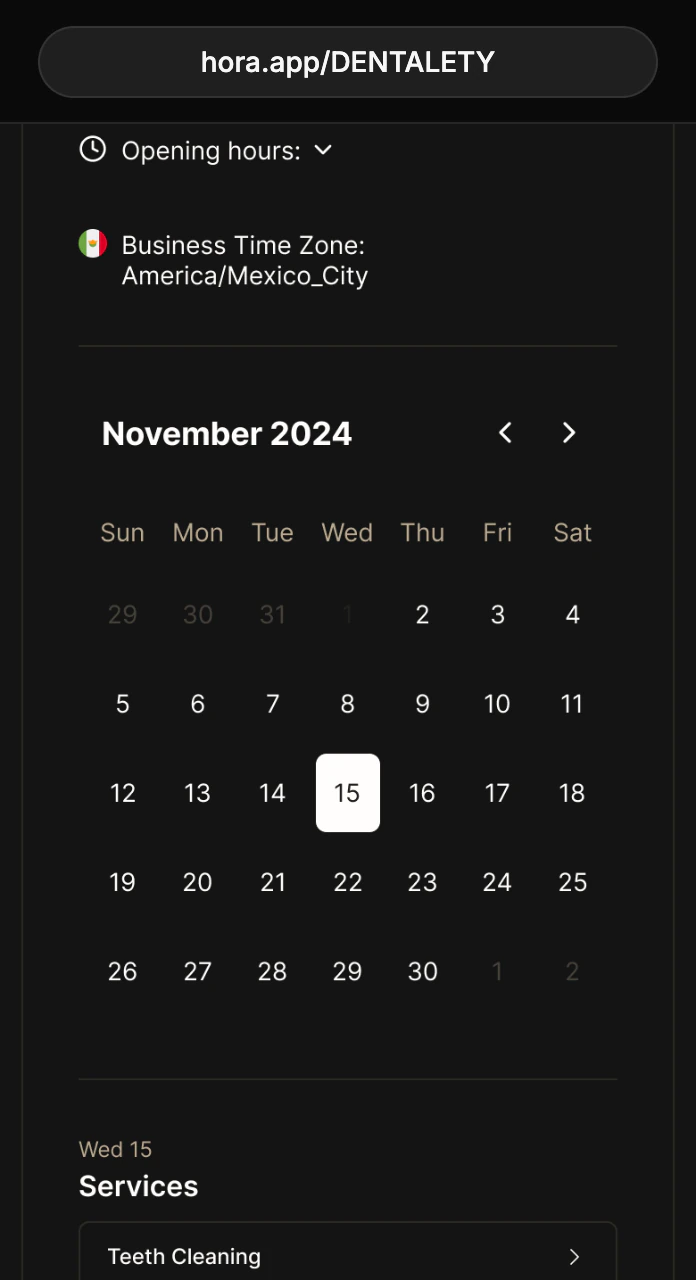
Unique appointment links
03
Automatic time zones
04
An installable PWA
Integrations
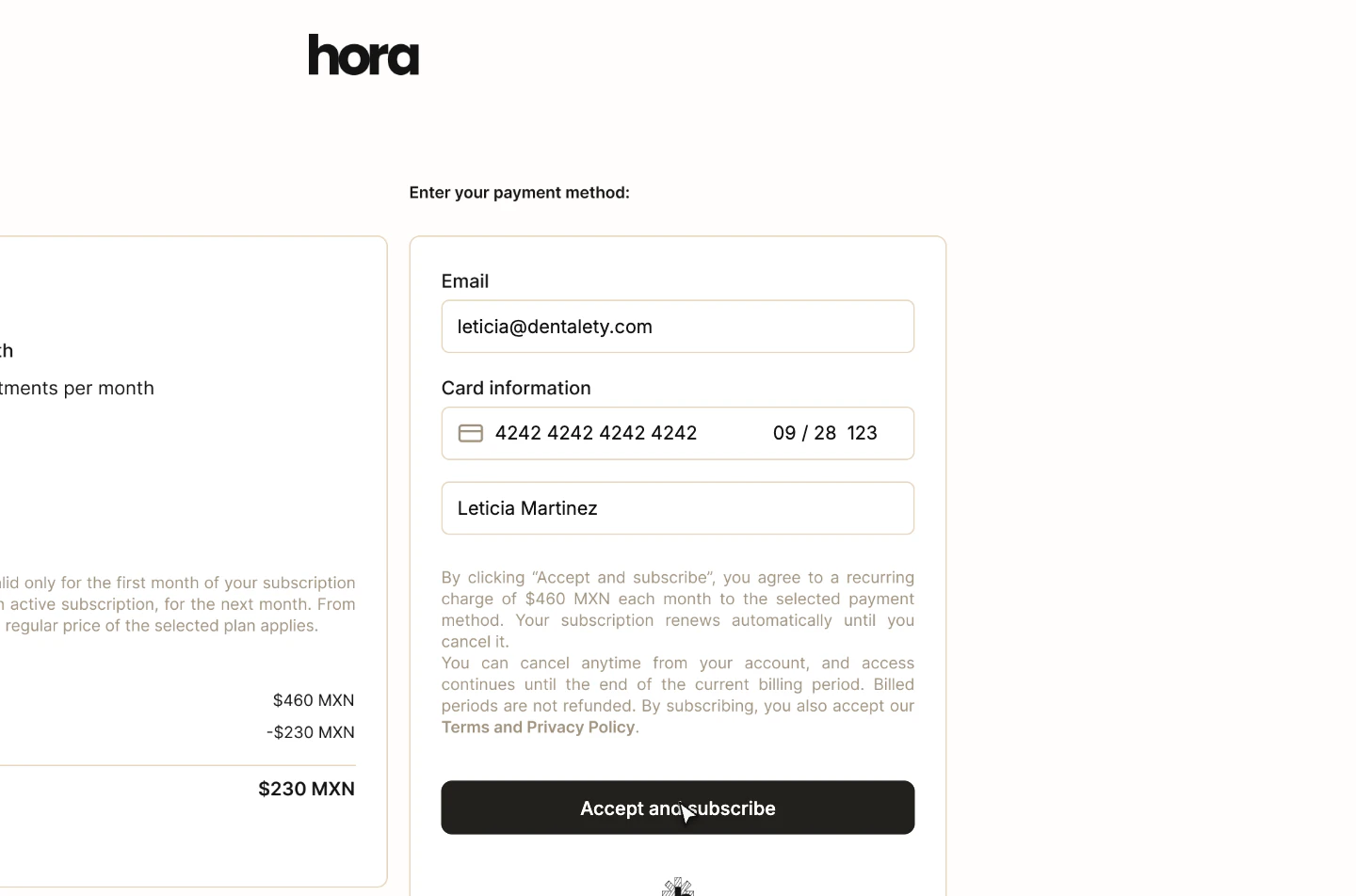
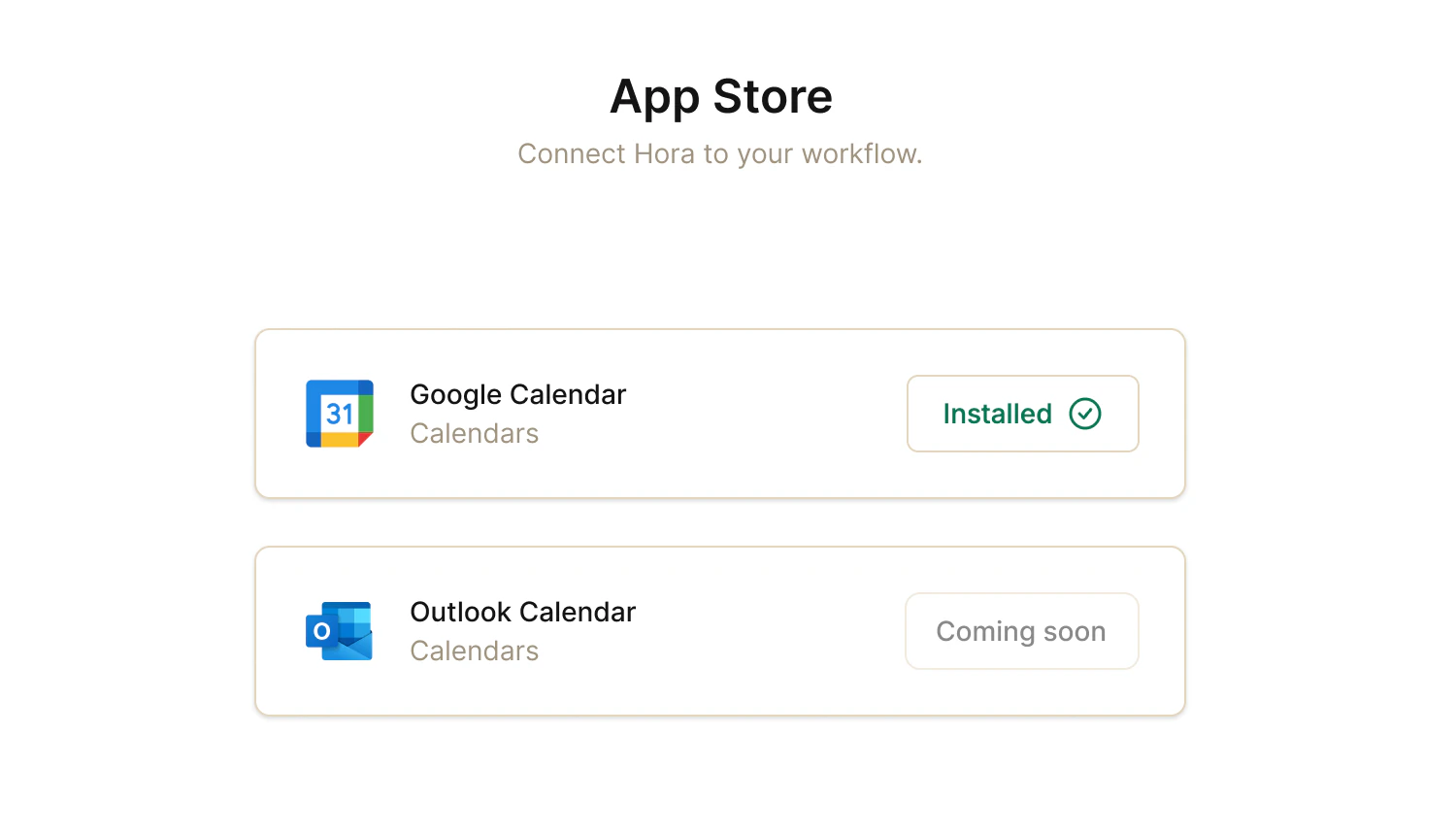
Hora connects to what a practice already uses. Subscriptions are paid through Stripe, and Google Calendar is one install away.
My role
Process and product
I wore two hats, and they fed each other.
Scrum Master
I facilitated sprints and dailies for a team adopting Next.js and MongoDB, moving from the PHP Laravel and MySQL stack they knew, all against an MVP deadline. Before any code was written, I ran review sessions to analyze results and agree on a plan, which kept us ready to pivot.
Product Designer
I helped build the brand identity from scratch and designed about 90% of the screens using shadcn/ui components. I also owned the handoff: light and dark color modes and CSS variables that let developers build exactly what we designed in Figma.
Tools
How the tools were used

Miro
Feedback meetings, brainstorming sessions


UI UX Design
Designed in Figma using Shadcn/ui libraries

Jira Software
Sprint planning and user stories for development

Confluence
App documentation
Iteration
What users taught us
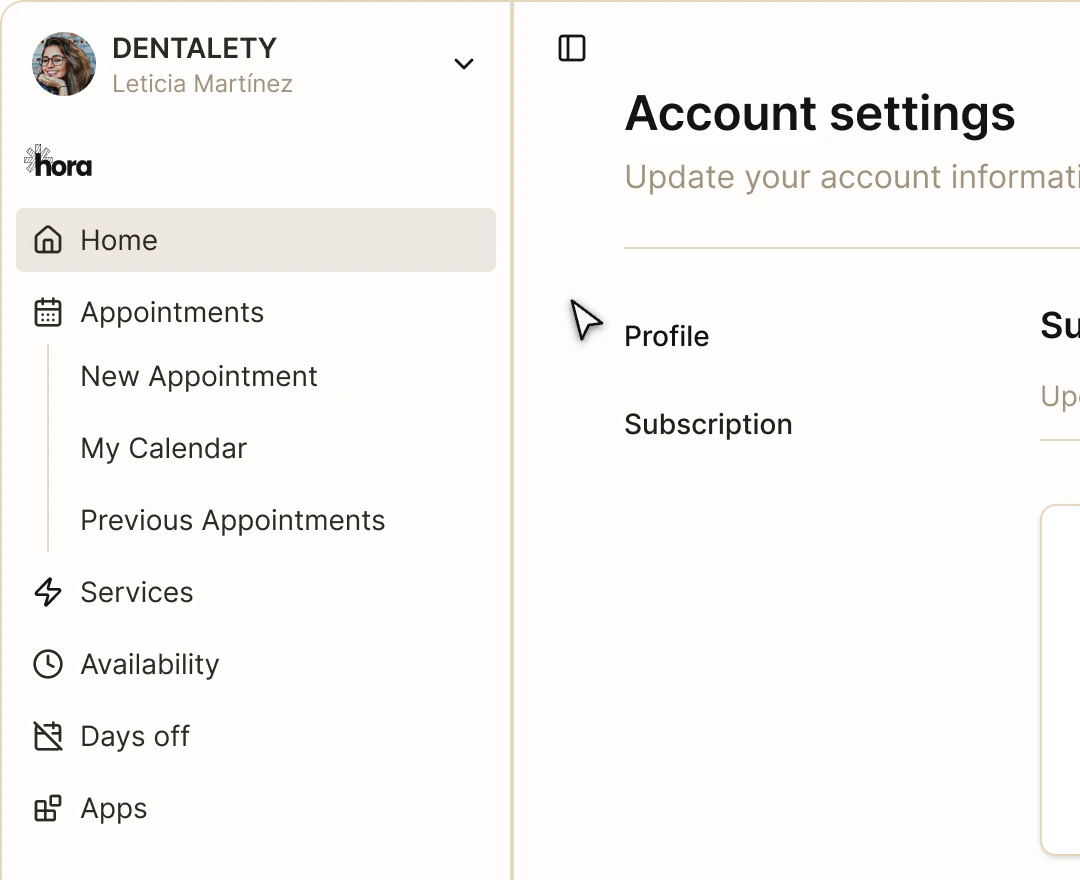
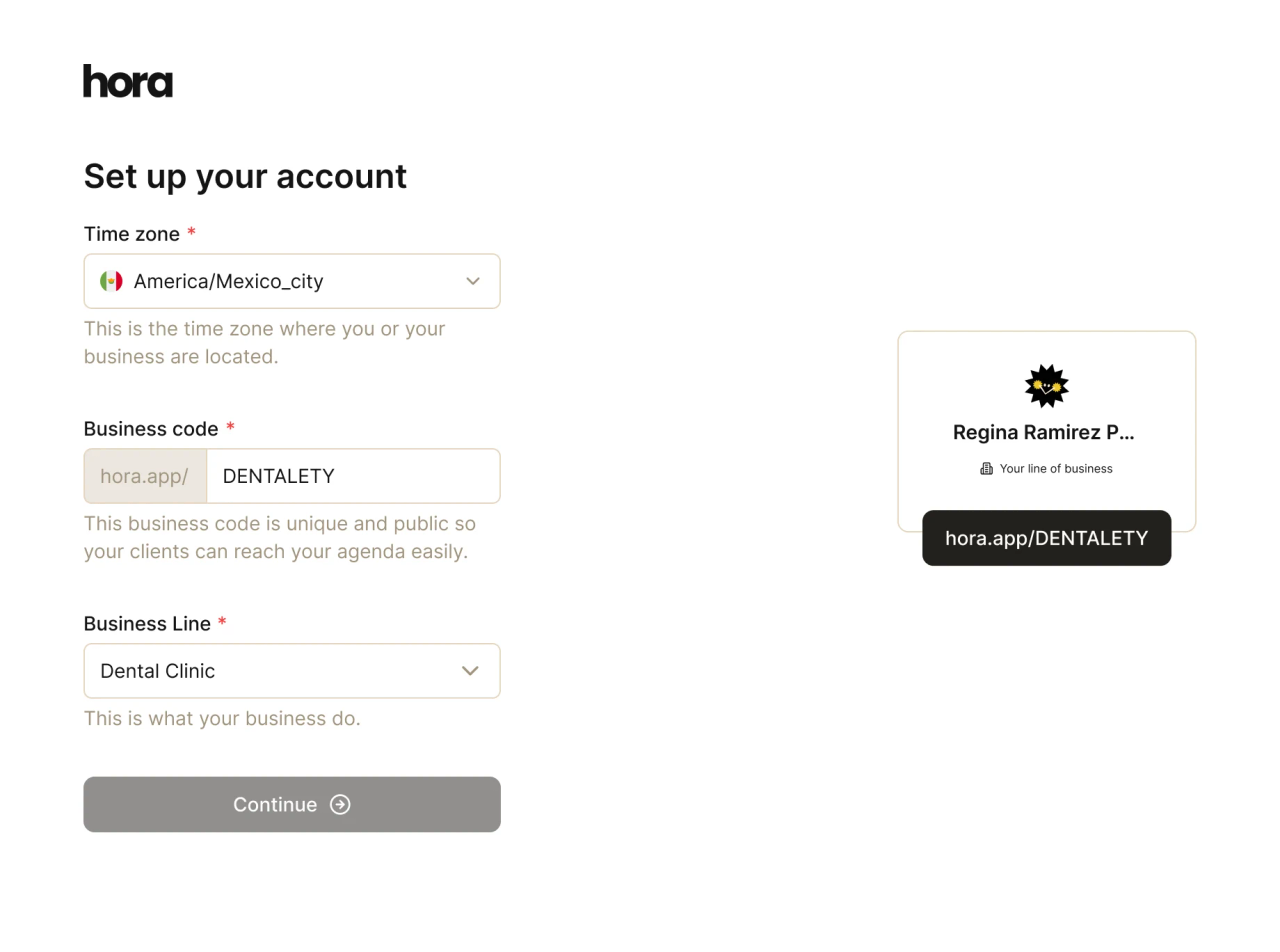
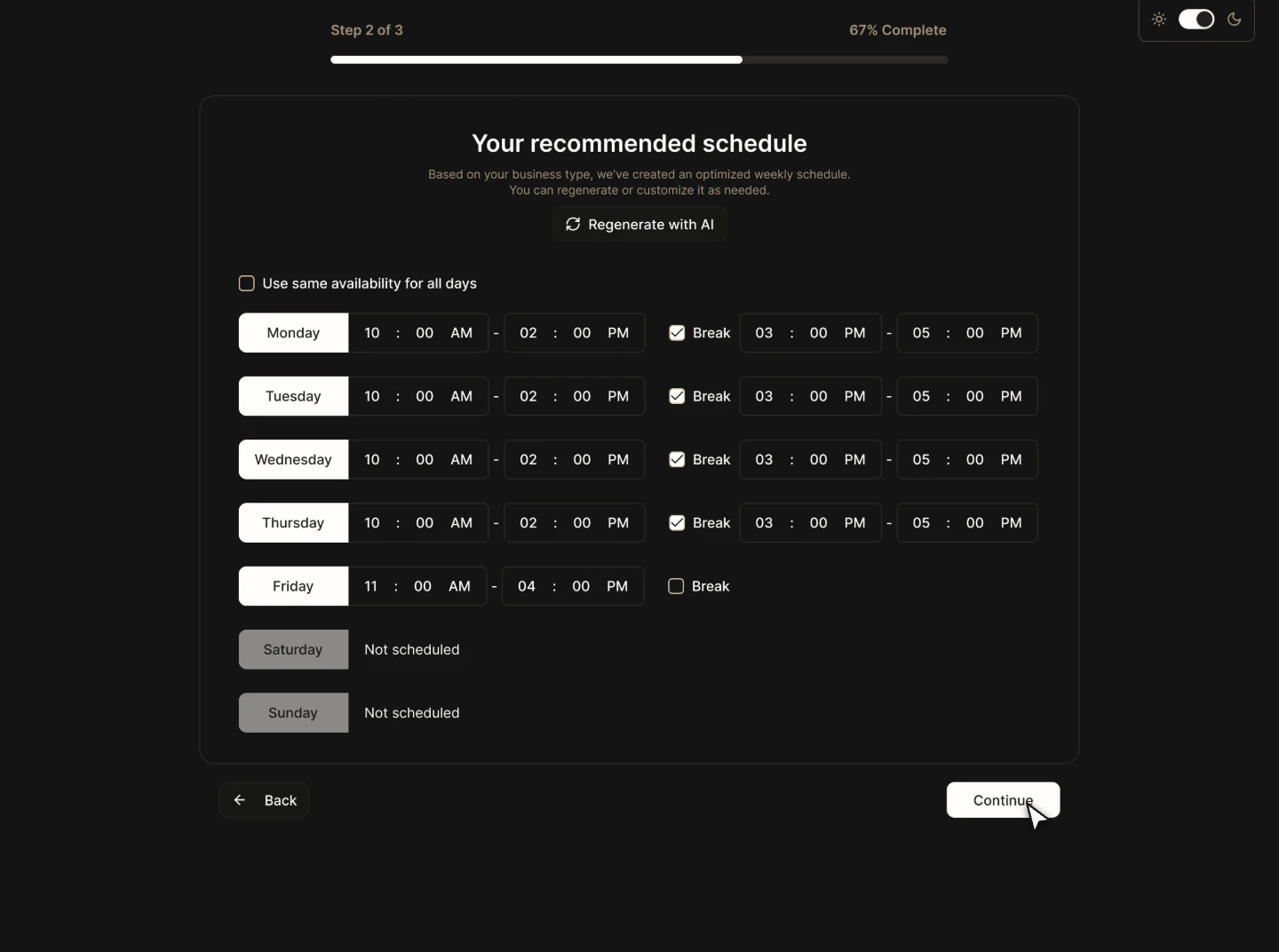
After interviews and research with real users, we redesigned three areas: the PWA experience, the sidebar navigation and onboarding. Each round came from what users told us, not from our assumptions.
01
PWA experience
02
Sidebar navigation
03
Onboarding
Recognition
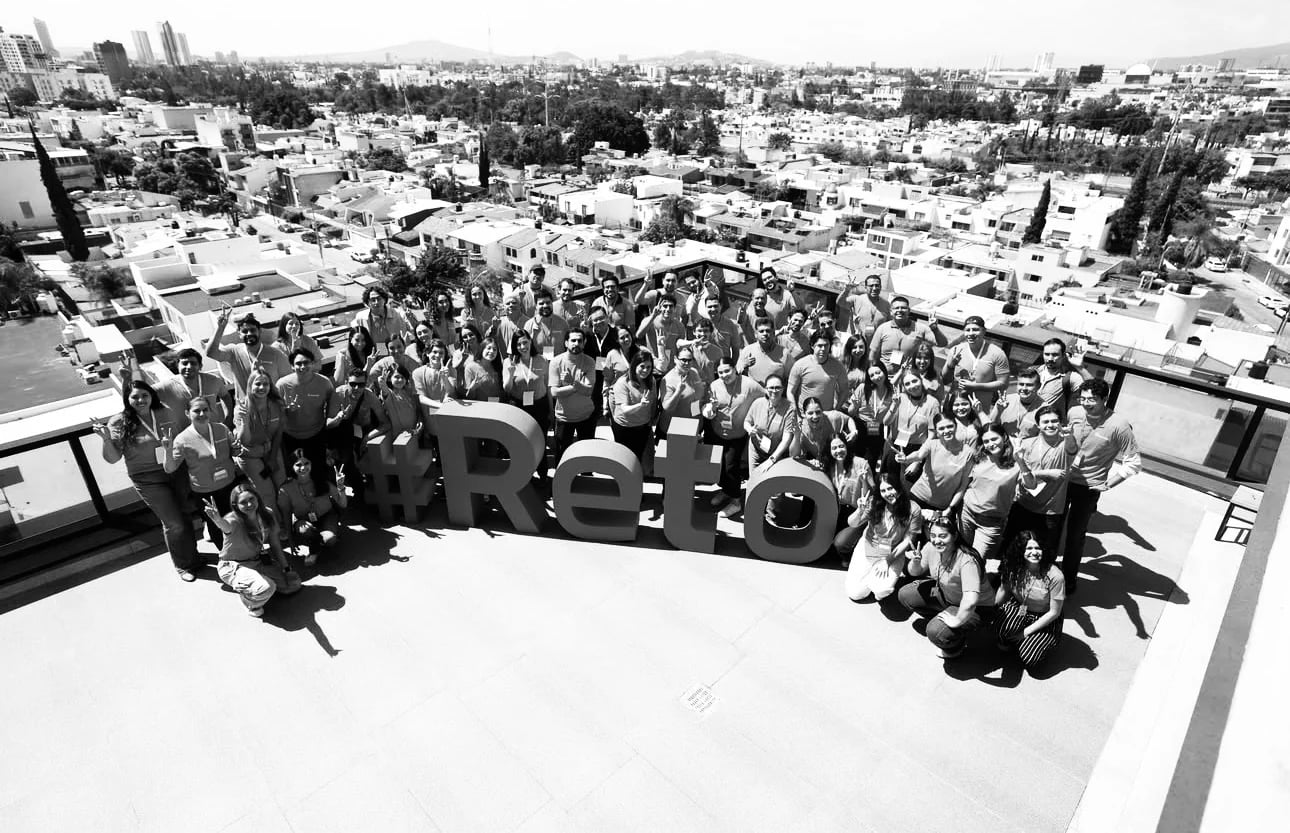
Top 30 of about 700 projects
Hora reached the Top 30 of about 700 projects in Reto Zapopan’s acceleration category.
What I took away
Speed only helps if it points in the right direction
Hora was a startup product inside a larger company, built against an MVP deadline. Research, validation and honest feedback kept that speed pointed the right way, and acting as both Scrum Master and designer showed me how process and product shape each other.
If one word sums up this project, it’s iteration.
More work
Or see NotesKeep reading: two personal projects.